Overview
Finding accurate local prayer times when travelling comes down to understanding how Islamic prayer times are calculated, choosing a reliable method or app that accounts for your precise location, and knowing which calculation method is recognised in the region you are visiting.
Muslim prayer times are determined by the position of the sun relative to your specific location on Earth — meaning they change daily, vary by city, and shift with the seasons. The five daily prayers each correspond to a distinct solar event, and modern apps and websites use astronomical data including latitude, longitude, elevation, and time zone to generate accurate schedules. Being aware of regional calculation differences — particularly around Fajr and Isha — ensures you are following the method accepted by local scholars wherever you are in the world.
Why prayer times change when you travel
One of the first things many Muslim travellers notice is that the prayer schedule they are used to at home simply does not apply abroad. This is not an error in your app or a quirk of the local mosque — it is how Islamic prayer times are designed to work. Muslim prayer times are calculated based on the position of the sun relative to a specific location on Earth, meaning they vary by city, date, and season.
Each of the five daily prayers is tied to a distinct solar event:
Fajr
True dawn — first light spreads across the horizon
Dhuhr
Just after the sun passes its highest point
Asr
Determined by the length of an object's shadow
Maghrib
The moment of sunset
Isha
When twilight fully disappears
To produce accurate daily schedules, modern calculations use astronomical data such as latitude, longitude, elevation, and time zone. When you fly from London to Kuala Lumpur, Dubai, or New York, all of these variables change — and your prayer times change with them. This is why simply using your home timetable abroad is not advisable.
Understanding the calculation methods
Here is where things get a little more nuanced. Not all Muslim prayer time calculations are identical around the world, and understanding why helps you choose the most appropriate schedule for wherever you are travelling.
The main differences arise in how Islamic scholars define the start of dawn (Fajr) and the disappearance of night (Isha). These events are estimated using the angle of the sun below the horizon, typically between approximately 12° and 19.5° depending on the method adopted by regional Islamic authorities.
The most widely used calculation methods
- Muslim World League (MWL): Fajr at 18°, Isha at 17°. Widely used across Europe, including the UK, and parts of the Americas.
- Islamic Society of North America (ISNA): Fajr and Isha both at 15°. Common in North America and Canada.
- Egyptian General Authority of Survey:
Fajr at 19.5°, Isha at 17.5°. Standard across much of Africa and parts of the Middle East.
- Umm Al-Qura University (Makkah):
Widely used across Saudi Arabia and the Gulf states, where Isha is set as a fixed interval after Maghrib.
- University of Islamic Sciences, Karachi: Fajr and Isha at 18°. Standard in Pakistan, Bangladesh, India, and parts of Afghanistan.
- Majlis Ugama Islam Singapura (MUIS): Used in Singapore and influential in Southeast Asia.
Traveller's Tip
Before you depart, look up which calculation method is recognised by the local Islamic authority or the main mosques at your destination. This takes just a few minutes and ensures your Fajr and Isha times are aligned with the local Muslim community, particularly important during Ramadan.
Prayer times at high latitudes: a special case
If you are planning to travel to northern or southern Europe, including countries such as Norway, Iceland, Finland, Sweden, or Canada during summer months, you will encounter one of the more complex challenges in Islamic timekeeping.
In high-latitude areas, twilight can last for many hours or even persist throughout the entire night during midsummer. This means that by the standard astronomical definition, the sun never fully descends to the angle that marks the end of Isha and the start of Fajr. For travellers, this creates a genuine practical difficulty.
Scholars have developed several approaches to handle this, including:
- The nearest latitude method:
Borrowing prayer times from the nearest city at a lower latitude where times are calculable normally.
- The midnight method:
Using the midpoint between sunset and sunrise as the boundary between Isha and Fajr.
- The seventh of the night method:
Dividing the night into seven equal portions to estimate Isha and Fajr.
- The angle-based method with fixed correction: Applying a fixed angle assumption when the sun does not reach the standard threshold.
If you are heading to a high-latitude destination, it is worth consulting the local Islamic centre or mosque in advance. Many have issued specific guidance for their communities that reflects careful scholarly deliberation over what works practically and spiritually in that environment.
The best tools for finding prayer times when travelling
The good news is that there has never been a better time to be a Muslim traveller when it comes to technology. A wide range of reliable apps and services can give you accurate, location-specific prayer times wherever you are in the world.
Dedicated prayer time apps
Apps such as Muslim Pro, Athan Pro, Qibla Connect, and Islamuna use your device's GPS to automatically detect your precise location and generate a prayer schedule accordingly. Most allow you to select your preferred calculation method manually, which is useful when travelling to a region that uses a different standard from your home country. Many also include a Qibla compass, which is invaluable in hotel rooms and unfamiliar spaces.
Mosque and local Islamic authority websites
For maximum accuracy and local legitimacy, the most reliable source is always the timetable published by the main mosque or Islamic authority in the city you are visiting. A quick internet search for "prayer times [city name] mosque" will typically surface the official timetable used by the local Muslim community. This is especially important during Ramadan, where Iftar and Suhoor times need to be absolutely precise.
Halal World Travel and other web platforms
A great starting point is the Halal World Travel prayer times page, which lets you look up location-specific prayer schedules tailored for Muslim travellers. It is designed with travel in mind, making it easy to check times for your destination before and during your trip. As with any calculated timetable, we recommend using it as a guide and cross-referencing with local sources where possible (see our disclaimer below).
You may also find the following websites helpful for additional reference. IslamicFinder.org, Aladhan.com, and PrayerTimes.com all allow you to search by city and apply your preferred calculation method. These are particularly useful when planning ahead. You can look up prayer times for your entire trip itinerary before you even leave home, which helps with planning around tours, flights, and restaurant bookings.
Using your smartphone's offline mode
One often-overlooked tip: download your prayer time data before you travel, particularly if you are going somewhere with limited data connectivity. Most dedicated prayer apps offer offline functionality once the schedule has been generated for a specific location. Save the data for each city on your itinerary in advance, so you are never caught without access.
Practical Tip
Set your prayer alarms the night before each new destination rather than relying on auto-update. Time zones can cause apps to briefly display incorrect times if GPS has not refreshed. A quick manual check takes 30 seconds and avoids any confusion.
Praying on the move: flights and transit
Long-haul flights present their own unique considerations for prayer times. As the aircraft crosses multiple time zones, sometimes at several hundred miles per hour, the sun's position relative to you is constantly changing. Islamic scholars have offered guidance on how to handle this:
- Pray according to the time zone of your departure city for the first portion of the flight, particularly on short to medium-haul journeys.
- On very long flights, many scholars recommend praying according to the time zone of a significant ground point you are passing over, or using the destination time zone for the latter part of the journey.
- If you are unsure, the widely accepted principle is that you should pray before the window of a prayer closes rather than risk missing it. A prayer performed in good faith is always better than a prayer missed due to uncertainty.
- When the aircraft cabin permits, perform wudu (ablution) in the lavatory and use an empty section of the aisle or a quiet corner of the cabin, facing the Qibla as closely as you are able. The Qibla from European airspace heading east, for reference, is broadly southeast.
Airports have also improved significantly for Muslim travellers in recent years. Most major international hubs now include dedicated prayer rooms. Look for signage to the multi-faith room or prayer room on airport maps, often located after security in the departure terminal.
Tips for keeping your prayers consistent while travelling
Travelling disrupts routines. That is simply part of the adventure. But with a little preparation, maintaining your five daily prayers while exploring the world is very achievable. Here are some practical habits to build before and during your trip:
- Research the local prayer schedule before departure. Print or screenshot the timetable for each city on your itinerary so you have it regardless of connectivity.
- Pack a travel prayer mat.
Lightweight, compact options are widely available and make praying in hotel rooms, parks, airports, and open spaces comfortable and easy.
- Identify mosques near your accommodation and key attractions. Apps like Muslim Pro include mosque finders, and Google Maps is surprisingly comprehensive. Simply search "mosque near me" when you arrive.
- Communicate with your travel companions. If you are travelling with non-Muslim friends or family, a brief conversation about prayer schedules at the start of the trip avoids any friction or misunderstanding later.
- Factor prayer times into your daily planning. Build fifteen to twenty minutes around each prayer into your sightseeing schedule. In many Muslim-majority destinations, this also aligns naturally with the rhythm of the local day.
- Be flexible with Dhuhr and Asr when possible. Both have relatively wide windows in most latitudes. If you are in the middle of a tour or a long journey, knowing the end time of each prayer window gives you flexibility to plan accordingly.
A note on prayer times in Muslim-majority destinations
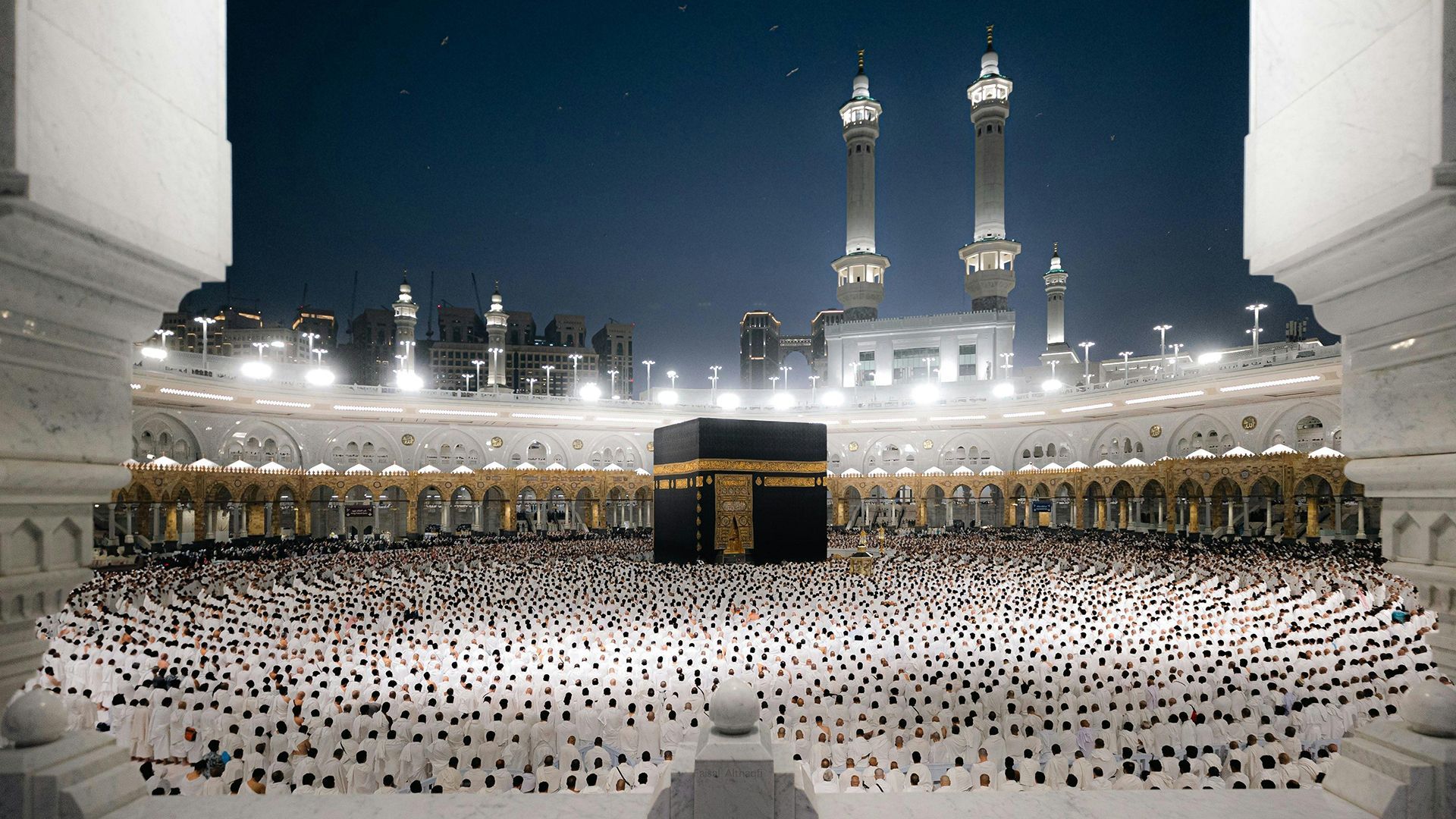
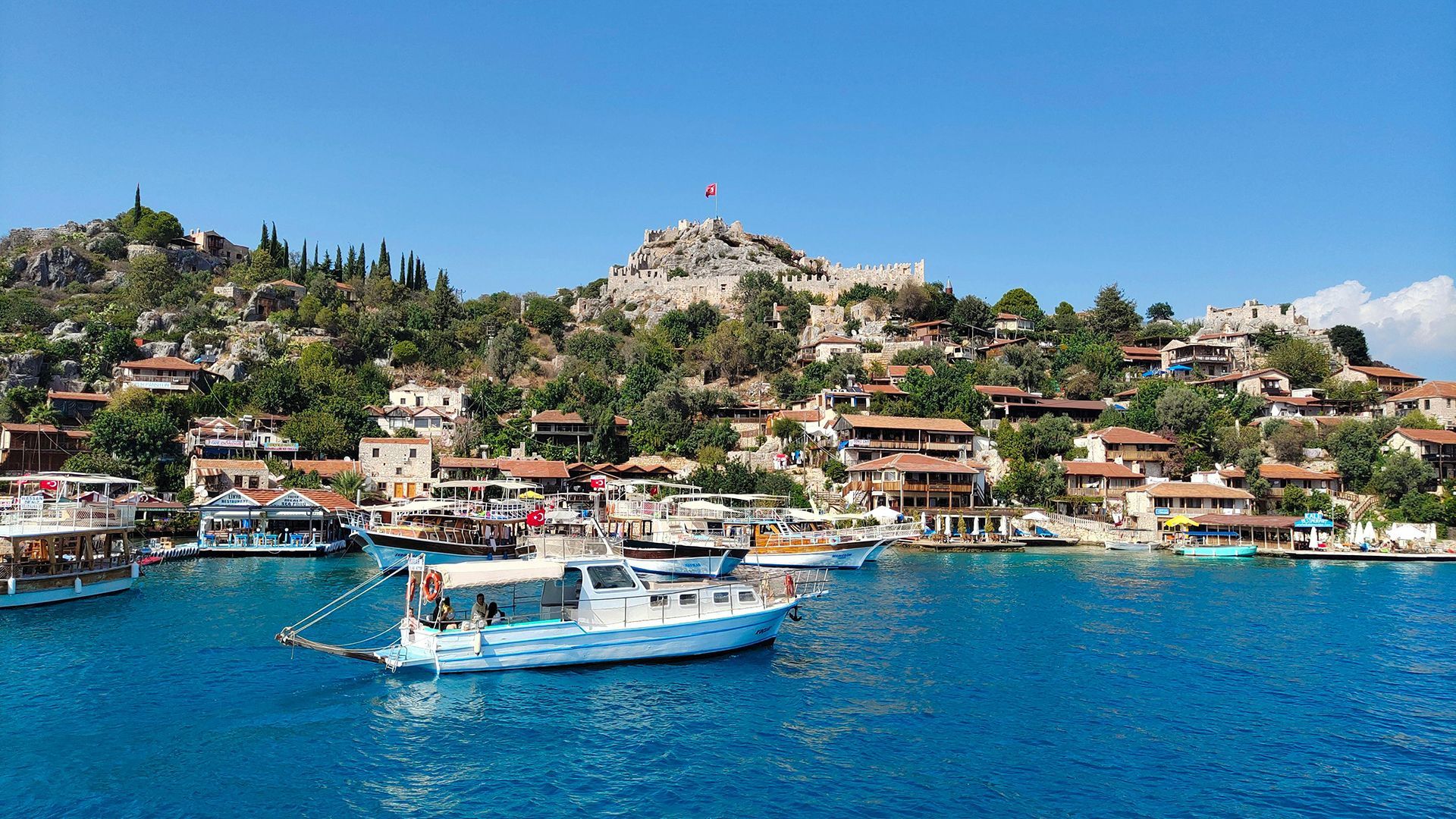
If your travel takes you to countries such as Turkey, the UAE, Morocco, Malaysia, Jordan, or Indonesia, you will find the infrastructure for prayer is woven into daily life. The adhan (call to prayer) from mosques serves as a real-time reminder for each of the five prayers, and local prayer timetables are widely posted in hotels, shopping centres, and public spaces.
In these destinations, the simplest approach is to align with the local community. Follow the adhan as it is called, which reflects the official timetable issued by the national religious authority. There is a profound sense of connection in praying in congregation with communities across the world, and travelling to Muslim-majority countries offers wonderful opportunities to experience that.
Summary: your prayer times travel checklist
- Download a reliable prayer times app and set it to GPS mode before departure
- Research the calculation method recognised by local scholars at your destination
- Save offline prayer schedules for each city on your itinerary
- Look up the nearest mosque to your accommodation in advance
- Pack a compact travel prayer mat and a small compass as backup
- For high-latitude destinations, check guidance from the local Islamic centre
- On long-haul flights, err on the side of praying early rather than risking a missed prayer
- In Muslim-majority countries, follow the local adhan and the national timetable
With the right preparation, prayer while travelling becomes less of a logistical challenge and more of a spiritual anchor, a constant in an otherwise ever-changing adventure.
Please note:
The prayer timetables provided on Halal World Travel are intended as a guide only. While we make every effort to ensure accuracy, times are generated using standard astronomical calculations and may not reflect the precise times issued by your local mosque or regional Islamic authority. Prayer times can vary based on the specific calculation method, elevation, and the methodology adopted by local scholars. We strongly recommend verifying times with your local mosque, Islamic centre, or an official national prayer timetable, particularly during Ramadan and when travelling to high-latitude destinations. Halal World Travel accepts no liability for any discrepancy between the times shown and those observed locally.